
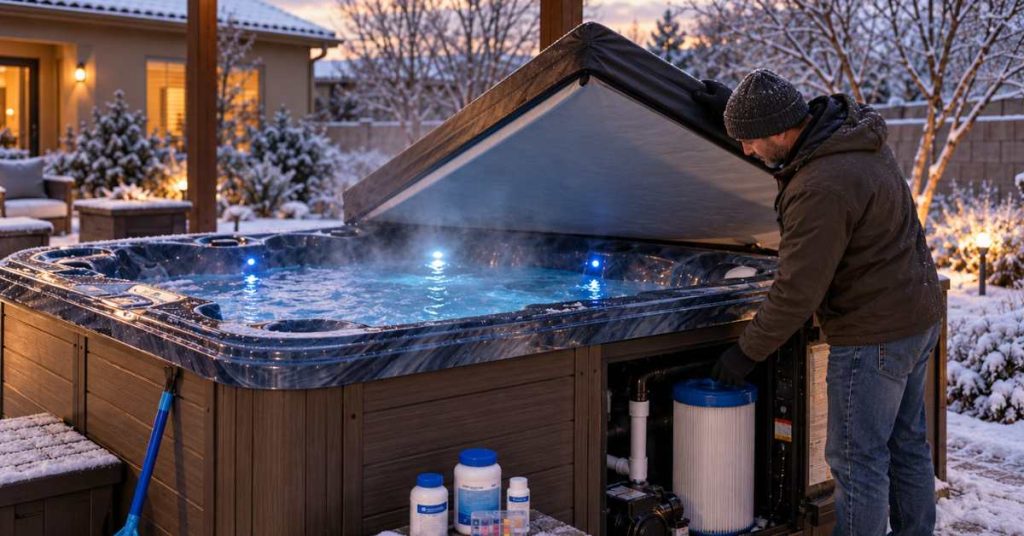
Winterizing a hot tub in Mesa is a little different from preparing one for months of snow and freezing weather.
For most local homeowners, there is no need to shut the spa down for the entire winter.
In fact, cooler evenings are often some of the best times to use it.
Still, nighttime temperatures can drop sharply. A damaged cover, circulation problem, power outage, or extended period away from home can become much more important once colder weather arrives.
So, should you completely drain the spa?
Usually not if you plan to keep using it.
For most Mesa owners, winter preparation is more about inspection, water care, heat retention, and making sure the equipment is ready for cooler nights.
If the spa will be shut down for an extended period, however, proper winterization becomes much more important.
Here is a practical step-by-step checklist.
Step 1: Decide Whether You Will Use the Spa This Winter
Start with one simple question:
Will the hot tub stay in use?
For most Mesa homeowners, the answer is yes.
If the spa will remain filled, powered, and operating, you generally do not need a complete drain-and-winterize process. Instead, focus on water chemistry, circulation, filtration, insulation, and the cover.
A full shutdown makes more sense if you plan to:
- Leave the home for an extended period
- Shut the spa off completely
- Leave it unattended during colder weather
- Store a spa that will not operate through winter
Making that decision first helps you avoid unnecessary work.
Step 2: Inspect the Spa Cover
The cover becomes especially important when nighttime temperatures fall.
Check it carefully for:
- Torn seams
- Cracked material
- Broken straps
- Sagging sections
- Gaps around the edges
- Excessive weight
A waterlogged cover can become extremely heavy and may not insulate as well as it once did.
Make sure the cover also fits properly.
Even a small gap can allow more heat to escape.
If the cover is badly worn, replacing it before winter may help the spa hold temperature more efficiently.
Step 3: Clean the Cover
Mesa dust does not disappear just because summer is over.
Brush or wipe away loose dirt and debris before winter use increases.
Use products made for your specific cover material rather than aggressive household cleaners.
Clean the underside when needed too.
A clean cover is easier to inspect because cracking, seam damage, fading, and other wear are easier to see.
Step 4: Check the Water Chemistry
Cooler weather does not mean water care stops.
Continue monitoring sanitizer, pH, alkalinity, and any other levels recommended for your spa and water-care system.
Winter may actually mean more frequent use for Mesa owners.
More time in the spa means more body oils, lotions, cosmetics, and other contaminants entering the water.
Keep testing consistently.
Clear-looking water is not always properly balanced water.
Step 5: Decide Whether the Spa Is Due for Fresh Water
If the same water has been in the spa for several months, fall or early winter may be a convenient time for a drain and refill.
Over time, spa water accumulates minerals, chemicals, body oils, and other dissolved material.
Mesa’s mineral-rich water can add another challenge.
Fresh water gives you a cleaner starting point.
Still, follow the spa manufacturer’s recommended drain-and-refill schedule rather than draining simply because winter has arrived.
Step 6: Clean and Inspect the Filter
The filter works year-round.
Before winter, remove it and give it a closer inspection.
Rinse debris from the pleats.
Use a proper filter-cleaning product when recommended.
Then inspect the cartridge itself.
Replace it if the material looks damaged, the bands are broken, the plastic is cracked, or the filter no longer comes clean.
Good filtration supports water clarity and proper circulation.
Circulation becomes especially important when temperatures drop.
Step 7: Check the Water Level
Keep the water within the range recommended for your spa.
If it drops too low, circulation and filtration may not work correctly.
Mesa’s dry climate can continue causing evaporation even during cooler months.
Check the level regularly.
Do not assume evaporation stops just because summer is over.
If the spa suddenly begins losing significantly more water than usual, look for a possible leak.
Step 8: Inspect Pumps, Jets, and Circulation
Turn the spa on and pay attention.
Do the jets feel normal?
Is the water circulating properly?
Do the pumps sound different than usual?
Are any error messages appearing?
A circulation problem is worth addressing before a cold night.
A spa that is operating normally can maintain its temperature far more effectively than one with a failing pump or circulation issue.
Step 9: Look for Leaks
Walk around the spa and check the equipment area.
Look for moisture, dripping water, or wet areas that were not there before.
Even a small leak matters because it can lower the water level and create additional equipment problems.
Leaks also rarely improve on their own.
If you find one and cannot identify the source, schedule professional service.
Step 10: Inspect the Cabinet and Equipment Area
Open the equipment access panel if your owner’s manual allows routine inspection.
Look for anything unusual.
You may notice:
- Moisture
- Evidence of pests
- Loose insulation
- Damaged components
- Unusual corrosion
Do not start disassembling electrical equipment.
If something looks wrong, have a qualified spa technician inspect it.
The goal is to catch obvious issues, not turn seasonal maintenance into a DIY equipment repair.
Step 11: Confirm the Temperature Settings
If you plan to use the spa throughout winter, set the water temperature based on your comfort and the manufacturer’s recommendations.
You may prefer warmer water as Mesa evenings become cooler.
But hotter is not always better.
The CDC recommends that hot tub water not exceed 104°F.
Choose a comfortable setting below that maximum and follow any additional safety guidance that applies to you.
Step 12: Review Energy-Saving Settings
Many modern spas offer different filtration, heating, economy, or rest modes.
Winter is a good time to understand how yours works.
The goal is not automatically to choose the setting that sounds most efficient.
You want a mode that fits the way you actually use the spa.
If you soak every evening, constantly reheating cooled water may not be convenient.
Check the owner’s manual for your specific model instead of guessing.
Step 13: Keep the Cover Closed When the Spa Is Not in Use
This simple habit makes a noticeable difference.
When you finish using the hot tub, replace the cover properly.
Keeping it closed helps retain heat, reduce evaporation, and keep dust, leaves, and debris out of the water.
If you use a cover lifter, inspect that too.
Make sure the hardware operates smoothly and holds the cover securely.
Step 14: Prepare the Area Around the Spa
Winter maintenance is not limited to the hot tub itself.
Check the surrounding area too.
Make sure:
- Steps are stable
- Handrails are secure
- Pathways are well lit
- Walking surfaces are clear
- Outdoor lighting works
Mesa evenings can become surprisingly cool, and winter use often happens after dark.
A safe, easy path from the house can make the spa much more convenient to use.
Step 15: Plan for Vacations or Extended Travel
If you are leaving Mesa for only a few days, you may simply need to confirm that the spa is operating normally before you go.
Longer absences deserve more planning.
Do not shut off a filled spa and leave it unattended during potentially freezing conditions.
Water could remain inside the plumbing and equipment without heat or circulation.
Instead, follow the manufacturer’s recommendations or arrange professional winterization if the spa will be shut down for an extended period.
What If You Want to Completely Winterize the Hot Tub?
Complete winterization involves much more than draining the visible water from the shell.
Water can remain inside:
- Plumbing lines
- Pumps
- Jets
- Heater components
- Filter housings
If trapped water freezes and expands, it can damage plumbing or equipment.
That is why simply opening the drain and walking away is not enough.
Step 16: Shut Off the Power Before Draining
If you are completely winterizing the spa, turn off the electrical supply according to the manufacturer’s instructions before draining.
Never run pumps or heaters without the proper water level.
Water and electrical equipment also require appropriate safety precautions.
If you are unsure about the process, professional service is the safer option.
Step 17: Drain the Spa Properly
Follow the manufacturer’s instructions for draining your particular hot tub.
Also follow any local requirements for disposing of spa water.
Do not assume chemically treated water can be released anywhere.
Plan the discharge location before opening the drain.
A submersible pump may speed up the process when appropriate.
Step 18: Remove Water From the Plumbing
This is what separates true winterization from a routine water change.
Draining the shell does not necessarily empty the plumbing.
Water may remain in lines, pumps, jets, filter housings, and other components.
That remaining water needs to be removed according to the manufacturer’s winterization procedure.
This is also where mistakes can become expensive.
If you are unfamiliar with the plumbing system, professional winterization is usually the safer choice.
Step 19: Clean and Dry the Empty Spa
Once the system has been properly drained and winterized, clean the shell with a spa-safe, non-abrasive product.
Remove any remaining water.
Clean the filter area.
Then leave the spa in the condition recommended by the manufacturer for storage.
Again, an empty shell is not the same thing as a properly winterized hot tub.
The hidden plumbing is the critical part.
Step 20: Secure the Cover
Once winterization is complete, close and secure the cover.
Check the straps and locks if equipped.
The cover helps keep dust, leaves, rain, and other debris out of the empty spa.
Mesa wind can be surprisingly strong, so make sure the cover remains secure.
Do Most Mesa Hot Tubs Need Full Winterization?
Usually not.
Mesa’s climate allows many homeowners to keep using their spas throughout winter.
Keeping the hot tub filled, heated, maintained, and operating normally is often easier than shutting everything down.
For most local owners, “winterizing” really means preparing the spa for cooler weather.
Check the cover.
Clean the filter.
Balance the water.
Inspect the equipment.
Watch the water level.
Then enjoy the spa.
Complete winterization becomes more important when the hot tub will remain shut down and unused for an extended period.
Sunset Spas Helps Mesa Owners Prepare for Winter
Winter can be one of the best seasons to own a hot tub in Mesa.
Cool evenings make warm water especially inviting, and in most cases there is no reason to put the spa away for the season.
A little preventive maintenance can help keep it ready.
Sunset Spas Mesa helps hot tub and swim spa owners with water-care products, filters, replacement covers, accessories, maintenance, and professional service.
If you plan to keep using the spa, prepare it for cooler weather and enjoy it.
If you plan to shut it down, make sure it is properly winterized rather than simply drained.
Protecting the plumbing and equipment now can help prevent an unpleasant surprise when you are ready to use the hot tub again.
